
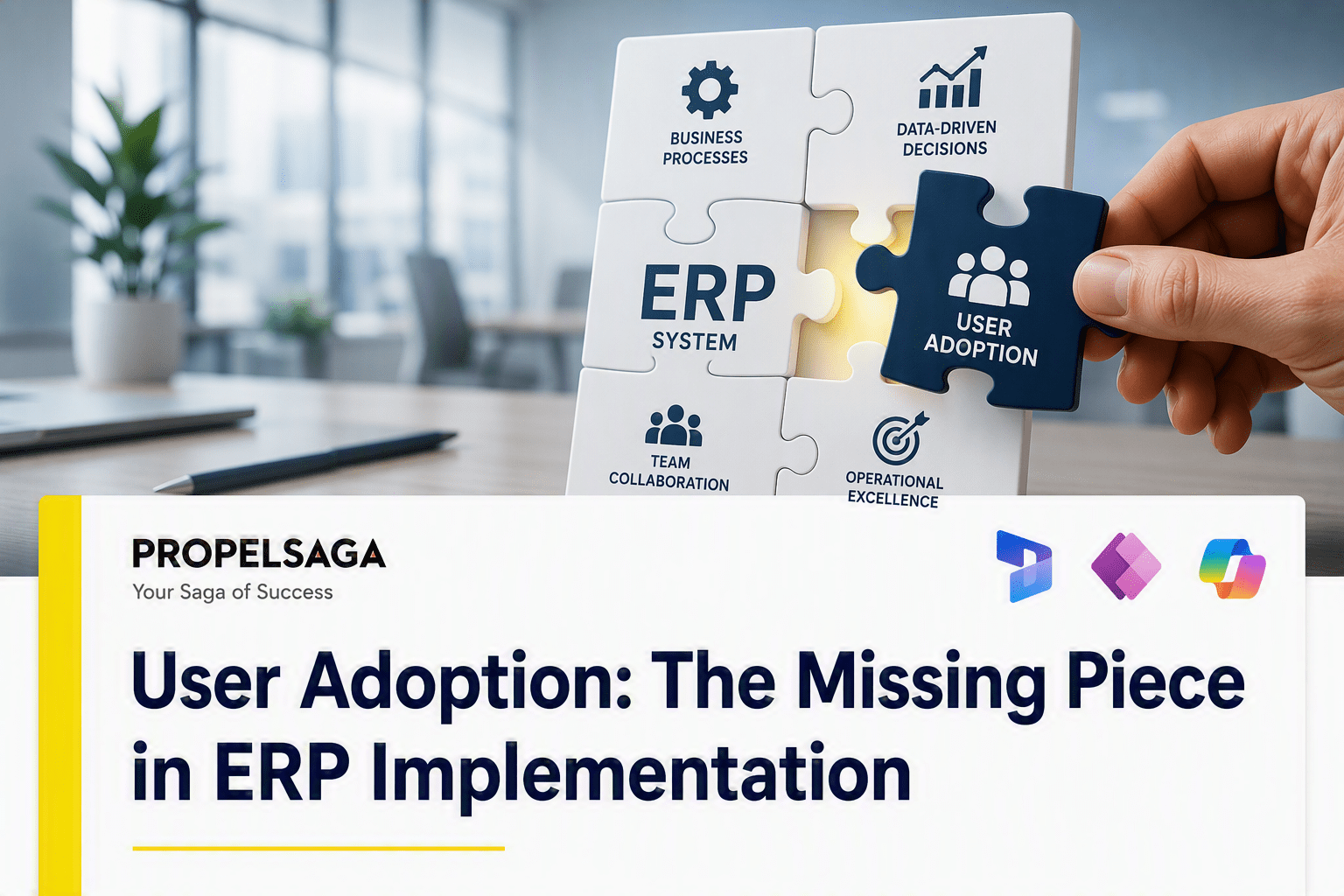
An ERP implementation is often declared successful when the system goes live, the data is migrated, and the project stays within budget.
But from a leadership perspective, those are implementation milestones—not business outcomes.
The real question is:
Has the organization changed the way it operates because of the ERP?
That is where user adoption becomes one of the most overlooked factors in ERP success.
A Live ERP Does Not Mean an Adopted ERP
Organizations can invest heavily in an ERP platform and still see employees relying on spreadsheets, manual approvals, offline reports, and legacy processes.
The technology is in place, but the organization continues to operate as it did before.
This creates a hidden cost. Management may believe it has a single source of truth, while teams continue maintaining parallel sources of information.
Over time, this affects data quality, process efficiency, reporting accuracy, and ultimately management's ability to make decisions with confidence.
Why Adoption Becomes a Leadership Issue
User adoption is not simply an HR or training responsibility. It is a business transformation issue.
When users don't adopt the intended processes:
- Automation benefits remain unrealized.
- Management reporting becomes less reliable.
- Teams develop workarounds.
- Process standardization breaks down.
- The expected ERP ROI is delayed or reduced.
The organization may have successfully implemented the software while failing to realize the transformation it was supposed to create.
The Adoption Gap Starts Before Go-Live
The organizations that achieve stronger adoption typically address it during implementation rather than treating it as a post-go-live activity.
Three areas matter particularly:
Involve the business early: The people who own and execute processes should have a voice in how those processes are designed. This creates ownership rather than resistance.
Design around business outcomes: Training should not simply teach users how to navigate screens. Users should understand how the new process improves speed, control, visibility, or decision-making.
Measure adoption after go-live: Go-live is the starting point for measuring whether the investment is delivering value. Usage patterns, data quality, process compliance, support issues, and business KPIs can reveal where adoption is falling short.
The C-Suite Question Should Be Different
Instead of asking:
"Did our ERP implementation go live successfully?"
Leadership should ask:
"Are we getting the operating and financial outcomes we invested in the ERP to achieve?"
That shift in perspective changes how ERP programs are managed.
Because ERP transformation is not completed when the technology is deployed. It is completed when the organization consistently uses the technology to operate better.
From Implementation to Business Value
For platforms such as Microsoft Dynamics 365, the opportunity goes beyond replacing legacy systems. Organizations can improve process automation, visibility, collaboration, analytics, and increasingly, AI-enabled decision support.
But these capabilities create value only when they become part of everyday operations.
Technology provides the capability. Adoption converts that capability into business value.
At PropelSaga, we believe ERP programs should be approached with this broader perspective—aligning technology, processes, people, and measurable business outcomes to ensure the investment delivers value beyond go-live.
Final Thought
An ERP implementation can be technically complete while the transformation is still unfinished.
The difference is user adoption.