
Supply chains are full of constant decisions: what to order, when to reorder, which supplier change to accept, how much to produce. Traditionally, this meant manually connecting the dots across spreadsheets, emails, and multiple systems.
Now, Microsoft D365 Supply Chain Management (SCM) is embedding AI directly into the platform. Instead of planners spending hours tracing data, the system does the explaining, leaving people to focus on the actual decision.
What’s New
Forecasts with Built-In Explanations
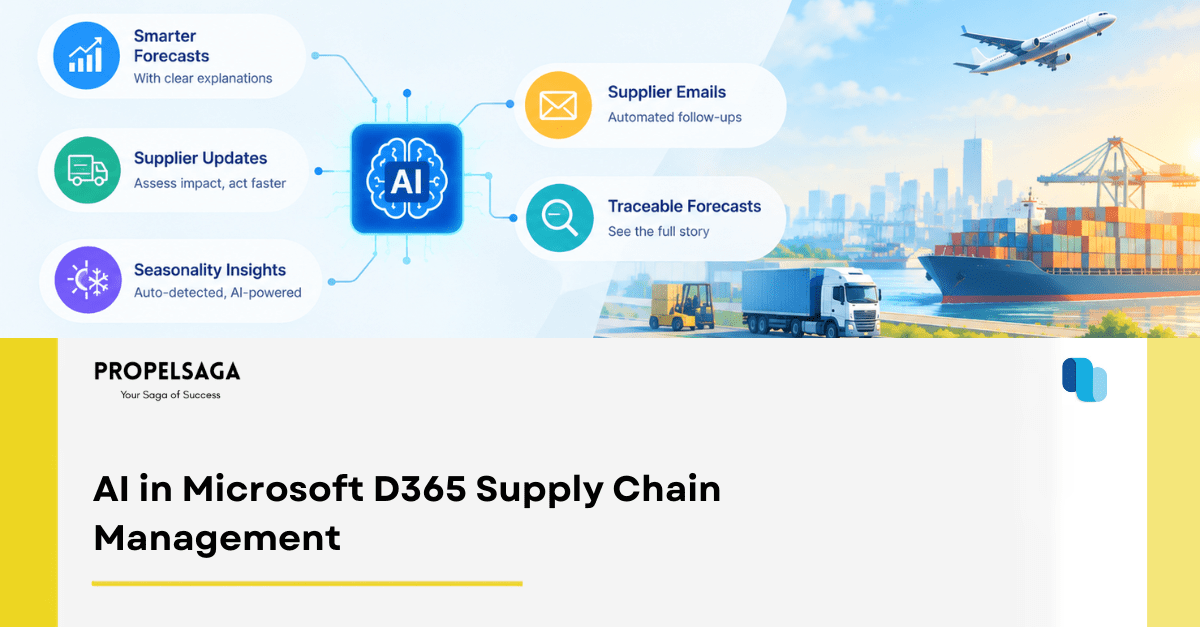
Demand forecasts now come with AI-generated explanations alongside historical data and accuracy metrics (SMAPE). Instead of just seeing a number, planners can understand what’s driving it. This builds confidence and cuts down on second-guessing.
Instant Clarity on Supplier Changes
When a supplier proposes a change to a purchase order, the Procurement Agent’s impact analysis automatically traces the effect across sales orders, production, and inventory. Each change is labeled Has impact or No impact.
Teams can:
- Approve safe changes instantly.
- Focus only on changes that matter.
- Run simulations to test “what if” scenarios before they happen.
Automatic Seasonality Detection
Generative AI now detects seasonal demand patterns automatically. It names each pattern, scores confidence, and highlights top contributors; no data science background required. Businesses can spot demand shifts early and plan inventory accordingly.
Less Manual Back-and-Forth with Suppliers
The Procurement Agent’s supplier communications feature reads vendor emails, matches them to open purchase orders, and drafts follow-ups or updates records automatically. Procurement teams spend less time managing inboxes and more time on strategic work.
Forecast Numbers You Can Trace Back
A new Copilot capability lets users hover over any forecast cell to see:
- The baseline forecast.
- Every manual adjustment.
- A chronological timeline of changes.
This turns a single number into an auditable story.
Part of a Bigger Shift
These SCM features are part of a broader move across Microsoft Dynamics 365. Copilot and AI agents are now built into finance, sales, customer service, and supply chain apps alike.
Users can:
- Ask questions in plain English.
- Get instant record summaries.
- Hand off repetitive tasks to autonomous agents.
The takeaway: AI in Microsoft Dynamics 365 isn’t a separate tool—it’s built into the screens people already use.
Why It Matters
- Forecast explanations and impact analysis remove manual tracing.
- Automated checks and supplier follow-ups cut investigations from days to minutes.
- Seasonality detection and explainability make sophisticated forecasting accessible to everyone.
- Microsoft continues to expand these capabilities with more metrics and agents ahead.
AI in supply chain management isn’t about replacing people, it’s about giving them faster, clearer answers so their time goes toward decisions that truly need human judgment.
How PropelSaga Can Help
At PropelSaga, we help Microsoft Partners deliver Microsoft Dynamics 365 and Power Platform capabilities to their clients. For AI-driven SCM features like these, our role is to turn what’s newly available into something clients can actually run with scoping, configuration, rollout, and ongoing support.
The goal isn’t just enabling a feature. It’s ensuring it fits the client’s processes so their teams actually use it.